



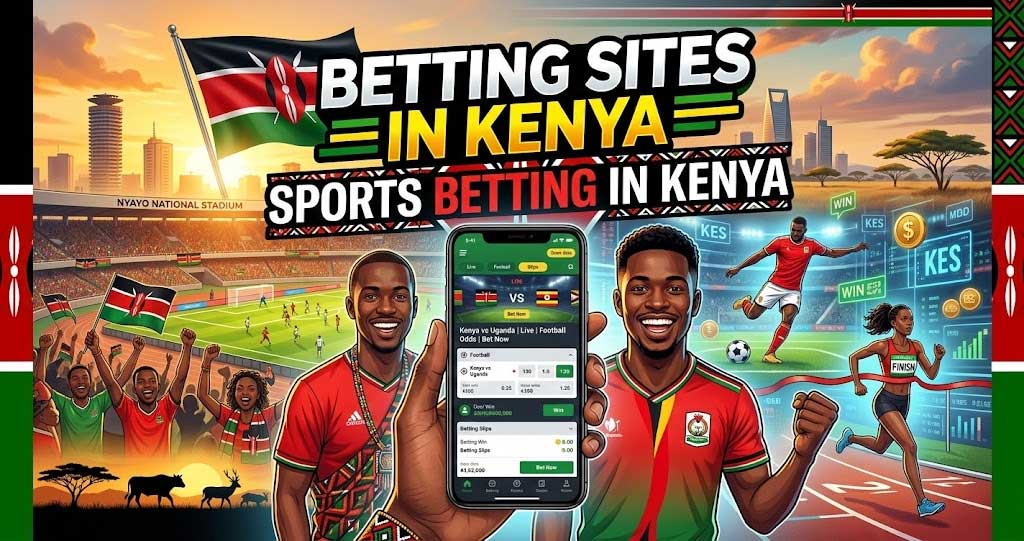
The sports betting ecosystem in Kenya operates on a completely different frequency compared to the rest of the African continent. What started as a grassroots movement inside local cyber cafes has aggressively evolved into a hyper-sophisticated, multi-billion shilling digital economy. Today, the Kenyan punter is analytical, ruthless in hunting for value, and deeply educated on market dynamics. Betting here is not just a weekend hobby tied to the English Premier League; for many, it is a calculated pursuit of "Kuomoka" (financial breakthrough). However, succeeding in 2026 requires far more than just predicting if Arsenal will cover an Asian Handicap. It demands a surgical understanding of local taxation, leveraging Safaricom's Daraja API for frictionless deposits, and navigating the strict compliance rules set by the BCLB.
Demystifying the KRA Tax Web: The True Cost of Betting
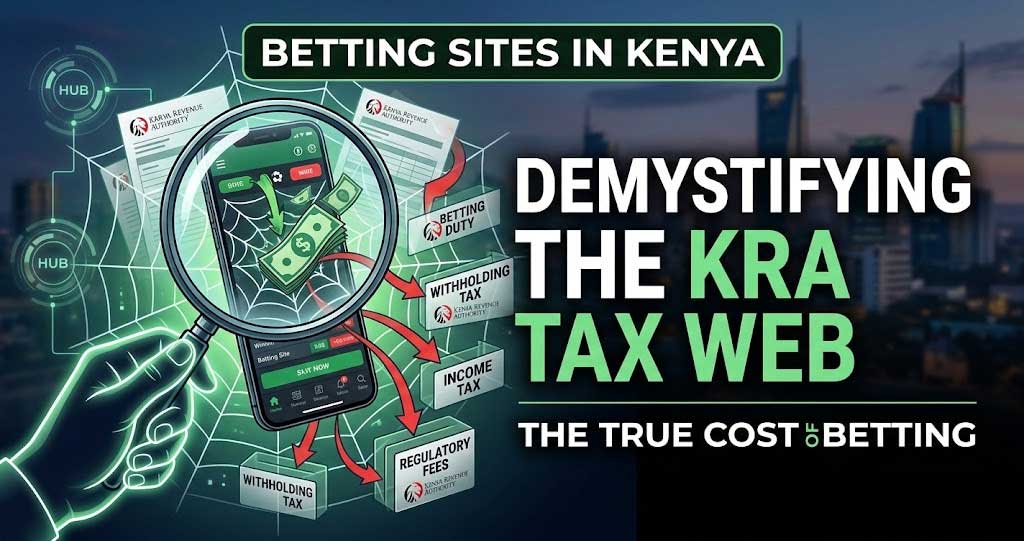
You cannot discuss sports betting in Kenya without confronting the absolute heaviest burden on a punter's bankroll: the Kenya Revenue Authority (KRA). The government enforces a brutal dual-taxation framework. Failing to understand the math behind these mandatory deductions will silently drain your capital, turning a winning strategy into a net negative.
The KRA Mathematics: Excise Duty vs. Withholding Tax
The law mandates two specific cuts from your money. First, a 12.5% Excise Duty is deducted directly from your initial stake before the bet is even placed. Second, a 20% Withholding Tax is applied strictly to your net profit if the bet wins. To illustrate exactly how much money you lose to hidden margins, look at the real-world calculation below:
| Transaction Step | Amount / Calculation | Resulting Balance |
|---|---|---|
| 1. Initial M-Pesa Deposit | You deposit 1,000 KES | 1,000 KES |
| 2. KRA Excise Tax (12.5%) | Deducted from stake (-125 KES) | 875 KES (Active Stake) |
| 3. Winning Slip (Odds: 2.00) | 875 KES x 2.00 | 1,750 KES (Gross Payout) |
| 4. Net Profit Calculation | 1,750 KES - 875 KES (Stake) | 875 KES (Net Profit) |
| 5. KRA Withholding Tax (20%) | 20% of 875 KES Profit (-175 KES) | -175 KES |
| 6. Final Withdrawal to M-Pesa | 1,750 KES - 175 KES Tax | 1,575 KES |
*Notice the harsh reality: Instead of doubling your 1,000 KES to 2,000 KES on a 2.00 odd, you walk away with 1,575 KES. This 32.5% combined tax margin is why sharp bettors aggressively hunt for "Tax Absorbed" promotions.
Offshore Crypto Bookies as a Tax Haven
Because of this oppressive local taxation system, a massive underground migration towards Web3 and cryptocurrency sportsbooks has occurred. Platforms operating outside KRA jurisdiction—like Duelbits and Cloudbet—offer massive advantages for the professional syndicate:
- Zero Excise Tax: 100% of your deposited USDT enters the market as your active stake.
- Zero Withholding Tax: Winnings are paid out in full to your decentralized wallet without government skimming.
- Inflation Protection: Holding betting bankrolls in USDT shields your capital from the unpredictable devaluation of the local KES fiat.
Safaricom Dominance and the Infrastructure of Kenyan Betting
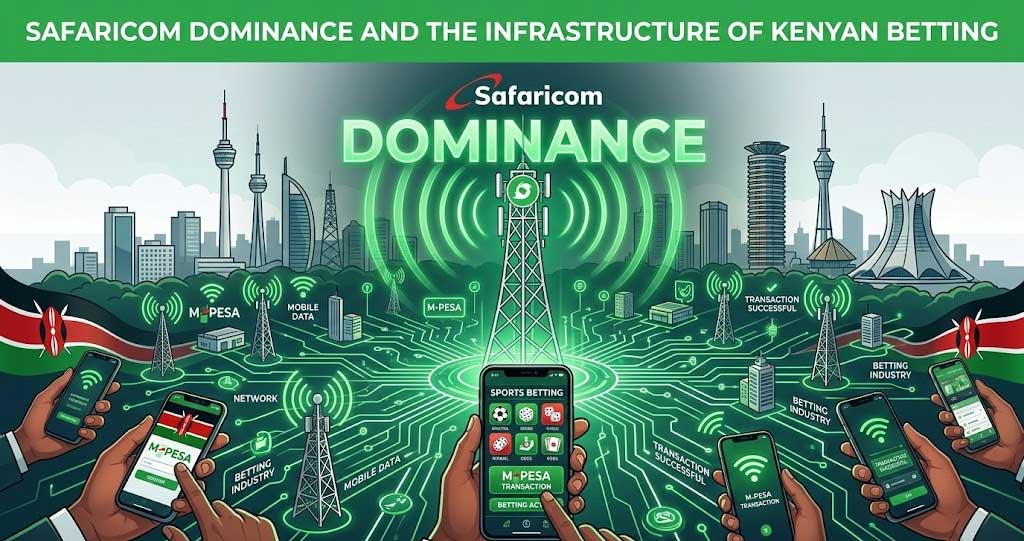
In Kenya, the telecommunications provider dictates the survival of a sportsbook. Safaricom's absolute monopoly over the mobile money space means a bookmaker's technical stack is entirely dependent on telco API integration.
M-Pesa STK Push vs. Manual Paybill
Funding a betting account used to require minimizing your browser, opening the Safaricom SIM Toolkit, manually typing a 6-digit Paybill, and entering the exact account name. This friction destroyed live betting opportunities. Today, elite platforms deploy the Safaricom Daraja API via STK (Sim Toolkit) Push. When you tap "Deposit 500 KES", a secure black Safaricom overlay instantly hijacks your screen, requiring only your M-Pesa PIN. If a bookie in 2026 still forces manual Paybill entry, they are functionally obsolete.
Data-Free Betting: Surviving on Zero MBs
Daily data bundles run out quickly in Nairobi. Being locked out of your account to cash out a slip because you have zero MBs is unacceptable. To solve this, operators whitelist their IP addresses with Safaricom. The benefits of this architecture include:
- Lite APKs: Apps compressed under 10MB that install instantly on entry-level Android devices.
- PWA Integration: Browser-based Progressive Web Apps that cache locally and consume zero active data.
- Uninterrupted Cash Outs: The ability to monitor live tracking graphics and trigger a cash out even when your data balance is completely depleted.
Decrypting Local Markets: Where the Money Moves
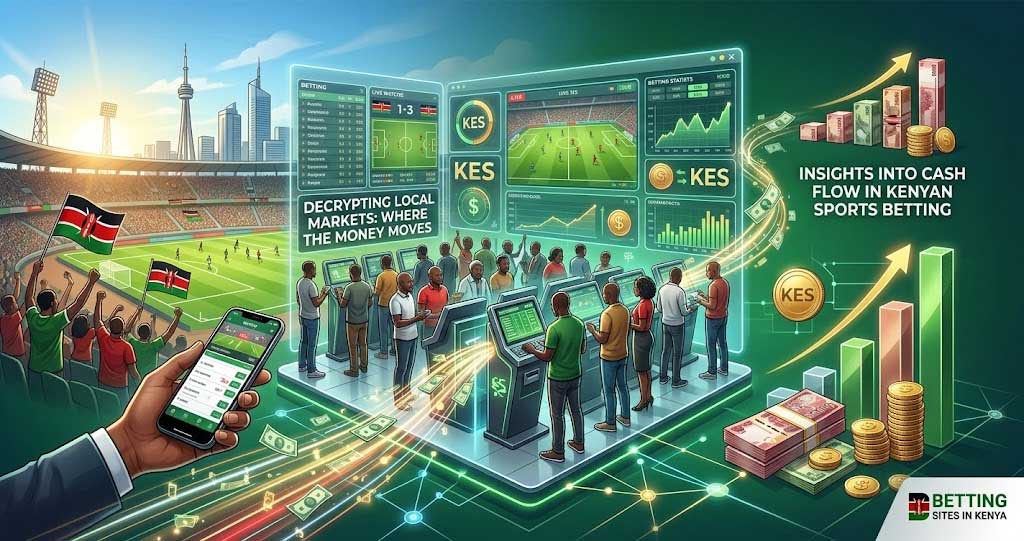
While European syndicates focus on singles, the cultural DNA of Kenya is aggressively wired towards high variance, massive odds multipliers, and localized gaming products.
The Cult of the Mega Jackpot
The Kenyan betting empire was built on the Jackpot. Operators curate lists of 13 to 17 highly unpredictable fixtures (often pulling from the Championship or Serie B). Punters stake a nominal fee—usually 50 KES—to predict the 1X2 outcome of every match. Prize pools regularly swell past 300 Million KES. Entire WhatsApp syndicates exist purely to analyze these specific fixtures, sharing permutations and hedging strategies for the 15-leg "Bonus Payouts".
Shikisha Bet and the Aviator Phenomenon
The modern punter demands instant gratification. Two distinct markets fulfill this need flawlessly. First is the "Shikisha Bet" (Bet Builder), allowing a user to combine "Arsenal to Win", "Over 8.5 Corners", and "Saka to Score" in a single 90-minute fixture for exponential odds. Second is the absolute dominance of Crash Games like Aviator. The premise—watching a multiplier climb (1.5x, 3.0x, 10.0x) and hitting cash out before the plane flies away—has taken over local bases. It offers intense visual dopamine, visible live chat showing what other Kenyans are winning, and the ability to double your money in exactly four seconds.
Avoiding the Traps: BCLB Regulation and Smart Staking
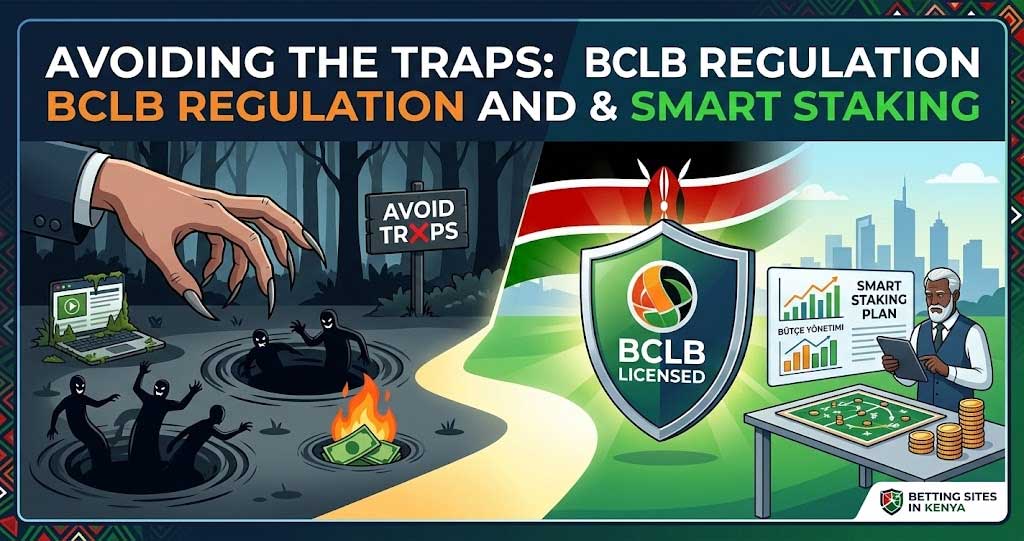
With millions flowing through M-Pesa daily, protecting your capital requires extreme discipline and an understanding of how to identify rogue operators.
Why the BCLB License is Your Only Shield
Betting on an unlicensed site in Kenya is financial suicide. The Betting Control and Licensing Board (BCLB) enforces strict liquidity requirements. If you hit a 5 Million KES accumulator on an unregulated offshore site, they can simply block your IP and vanish. You have zero legal recourse. A BCLB-licensed operator is legally bound to hold cash reserves in local banks and honor legitimate payouts. Always verify the BCLB license number in the website's footer before depositing a single shilling.
The Danger of Digital Micro-Loans
The darkest side of the Kenyan market is the weaponization of digital credit. With platforms like Fuliza, Tala, and the Hustler Fund providing instant credit to mobile phones, the temptation to borrow money to chase a losing slip is immense. Professional bettors operate strictly on bankroll management, never staking more than 1% to 5% of their liquid capital. Borrowing high-interest funds to wager on high-variance football outcomes is a mathematical trap. Treat betting as an analytical investment, accept the KRA tax realities, and only deploy your M-Pesa balance when the odds offer a genuine edge.